
Fact-based insight for the industry.
INTERVIEW MAY 2026
Interview with Rob Wyse: When AI Levels the Playing Field, the Advantage Moves Somewhere Else
Optimove has powered CRM marketing in iGaming since 2012 — Rob Wyse argues that as the tools spread, strategy, brand, and human judgment become the only differentiators left.

Rob Wyse, Senior Director of Communications, Optimove. Image courtesy Optimove
REGULATION
FACT-FOCUSED, CLARITY FOR THOSE WHO NAVIGATE CHANGE
Get the facts on legislative updates, compliance demands, and regulatory impacts—crafted for operators, experts, and anyone who needs to know what’s next.
Regulation
"Watch the match for free": how illegal streams funnel fans into Europe's black-market betting
New UK data show that most illegal sports streams carry unlicensed gambling ads and other risks, sharpening questions for regulators about how onshore rules and enforcement should evolve to keep "free‑stream" viewers in the licensed system.

“Watch now – free.” For many fans, a link like this is the first step into illegal sports streams that also promote unlicensed gambling, and can expose them to malware, spyware and scam content.

Digital dice and a world map: The global landscape of iGaming regulation (2020–2025), where compliance and risk are now as strategic as innovation.
Regulation
The Catalyst Years - What Drove the Regulatory Shift?
How geopolitics, financial risk, digital migration, and public opinion redefined compliance and competition for the world’s online gambling markets.

Many roads to "reasonable": regulators are narrowing the range of acceptable approaches, but each jurisdiction still charts its own route.
Regulation
Laws, Requirements, and the New Meaning of "Reasonable Measures"
A global overview of how 2020–2025 reforms tightened—but did not fully settle—the meaning of “reasonable measures” for licensed operators and their suppliers, and how layered rules on gambling, AML, sanctions, privacy, and marketing now define the real room for manoeuvre

Compliance is now a core part of iGaming strategy—not just a box to tick.
Regulation
Redefining "Reasonable": How iGaming Operators Are Rewriting Strategy Under Europe's New Rules
From new Dutch renewal tests and UK platform changes to Italy’s costly concessions and AI‑enabled monitoring, iGaming operators are redesigning compliance strategies—staying onshore where it pays, and redirecting growth to more attractive regulated markets.

A glowing clock overlaid with digital numbers, representing how real‑time data is reshaping what regulators and operators can reasonably be expected to see and do.
Regulation
Redefining From Checklists to Outcomes: The Next Mea ning of "Reasonable Measures"
As AI‑driven risk engines, intrusive affordability checks and diverging channelisation rates collide, iGaming compliance is being judged less by tools on paper and more by what happens to players and where they gamble
Featured Article
Prediction markets: When bets become commodities
Prediction markets have moved from university labs, offshore sites, and crypto experiments into the orbit of regulated US finance and gambling.
Kalshi, a CFTC‑regulated exchange for event contracts, now lists markets on elections, macro data, and major sports under the Commodity Exchange Act. Trump Media’s Truth Social plans to launch ‘Truth Predict’ on Kalshi’s infrastructure with Crypto.com’s US derivatives arm, and DraftKings and FanDuel have exited the American Gaming Association as they develop their own prediction‑style products, indicating that large sportsbook brands are actively exploring this format alongside their state‑licensed operations.

A Kalshi advert on a New York street display promotes live election contracts between Trump and Harris, illustrating how federally regulated event‑contract platforms are marketing political markets in public spaces while their legal status is still being contested. Photo by Imago / Alamy.
BUSINESS
FACTS, SHIFT AND FORESIGHT
Stay ahead with clear, evidence-backed reporting on market changes, technology advances and the strategies defning tomorrow's iGaming.
BUSNIESS
Physical, digital, or both: the strategic choice dividing US casino operators
The United States gambling market has never offered a single right answer, and 2026 is no exception. Legal sports betting now operates in 40 states. Online casino gaming is live and growing. Prediction markets — federally supervised event-contract platforms operating outside state licensing frameworks — are redirecting handle from the regulated market without the responsible gambling obligations or tax contributions that licensed operators carry. For casino operators, the choice between omnichannel integration, deliberate specialisation, and exclusivity-based protection has never been more consequential. The question is not which model wins. It is which model fits the assets, the market position, and the risk appetite of the operator making the choice.

Snoqualmie Casino, Washington State, operated by the Snoqualmie Indian Tribe. Tribal gaming generated over $40 billion in US revenue in 2024 — the third path in US casino strategy, and the one most shaped by exclusivity rather than scale. © Ian Dewar / Alamy
BUSNIESS
The convenience trap: why digital growth is not enough for casino operators
Online casino revenue is growing fast. Physical casino revenue is growing too, but at a third of the pace — and with fewer customers.
Both facts are true at the same time, and the operators reading them together are reaching very different conclusions about where to invest next.

The physical casino offers something digital cannot replicate — a shared experience worth making the trip for.
BUSNIESS
Prediction Markets: How Institutional Money and Political Pressure Are Driving Each Other
As Kalshi courts Wall Street and the Senate bans its own members, the forces accelerating prediction markets and the forces pushing back against them are no longer separate stories.

Combined lifetime trading volume for Kalshi and Polymarket surpassed $150 billion in April 2026, according to data from The Block — a milestone that accelerated both institutional interest and regulatory pressure simultaneously.
BUSINESS
Marketing’s Assembly Line Is Breaking Down
For years, iGaming marketing has operated like an assembly line: data, creative, CRM, and IT functions separated into sequential workflows. That model is now under pressure from two directions. On one side, AI tools promise near-instant campaign execution and increasingly granular personalization. On the other hand, regulators are tightening rules on how, when, and to whom operators can market—particularly around younger demographics. As costs rise and scrutiny increases, the question is no longer just how to move faster, but whether speed and control can coexist.

As AI accelerates campaign execution, iGaming operators face increasing pressure to balance speed with regulatory compliance and responsible targeting
BUSINESS
Prediction Markets: BETS OFF Tests Jurisdiction
US prediction markets have moved from niche experiment to regulatory test case. In February and March 2026, the Commodity Futures Trading Commission (CFTC), several US states, and Congress all took steps that pulled event contracts into the middle of a jurisdictional and political debate.
With the CFTC withdrawing its 2024 rule proposal, launching a fresh rule-making process, and lawmakers filing targeted bills, the stakes for iGaming operators, suppliers, and investors are higher – even if final outcomes remain uncertain.

The US Capitol in Washington, where lawmakers debate proposals such as the BETS OFF Act and other prediction‑market bills. © James Wooldridge / Alamy

Gambling rules on paper meets a fast growing online betting market in Latin America.
Business
Latin America series: The Gap Between Regulation on Paper and Players in the Channel
Channelisation, enforcement, and why a licensed market is not automatically a competitive one

Peru, Argentina and Chile sit at the centre of Latin America’s next wave of online gambling regulation. Source: iGaming Review
Business
Latin America series: Beyond Brazil: Peru, Argentina and the Next Wave of Regulated Markets
Where formal licensing is moving next — and what the region’s early movers can teach the markets still to open

Satellite view of South America, reflecting how gambling and sports‑betting regulation is evolving at very different speeds across Latin American markets.
Business
Latin America’s iGaming Market Enters it’s Regulatory Test.
The regional opportunity, the key markets, and why this moment matters for operators, suppliers and investors.

NFL on‑field action, like this quarterback play, sits at the heart of America’s sports‑betting handle and the new prediction‑market products launched by FanDuel and DraftKings. © ZUMA Press / Alamy
Business
Latin America series: How licensing works in practice.
The operational reality behind Brazil, Colombia and Mexico – what it takes to comply

Bad Bunny performs during the Apple Music Halftime Show at Super Bowl LX at Levi’s Stadium in Santa Clara, 8 February 2026. © Sipa USA / Alamy
Business
SuperBowl LX and Prediction Markets
Event contracts, new CFTC tone and rising media coverage.

NFL on‑field action, like this quarterback play, sits at the heart of America’s sports‑betting handle and the new prediction‑market products launched by FanDuel and DraftKings. © ZUMA Press / Alamy
Business
Fan Duel and DraftKings: Two Strategies for Predicition Products
The sportsbook heavyweights are piloting CFTC‑regulated event contracts, using a new product vertical to reach sports fans in non‑betting states while still treating traditional sportsbooks as their main business.

A Las Vegas casino framed against a “Wall Street” plaque underlines the central tension in prediction markets: regulators and operators must decide whether these products belong in the world of financial trading, gambling – or under a new rulebook altogether.
Business
A New Animal: How Prediction Markets Push Sportsbooks to Choose Between Wall Street and Vegas
New York’s clash with Kalshi, Polymarket’s rise, and insider‑trading fears are turning prediction products into a regulatory and brand‑trust stress test for U.S. sportsbooks.
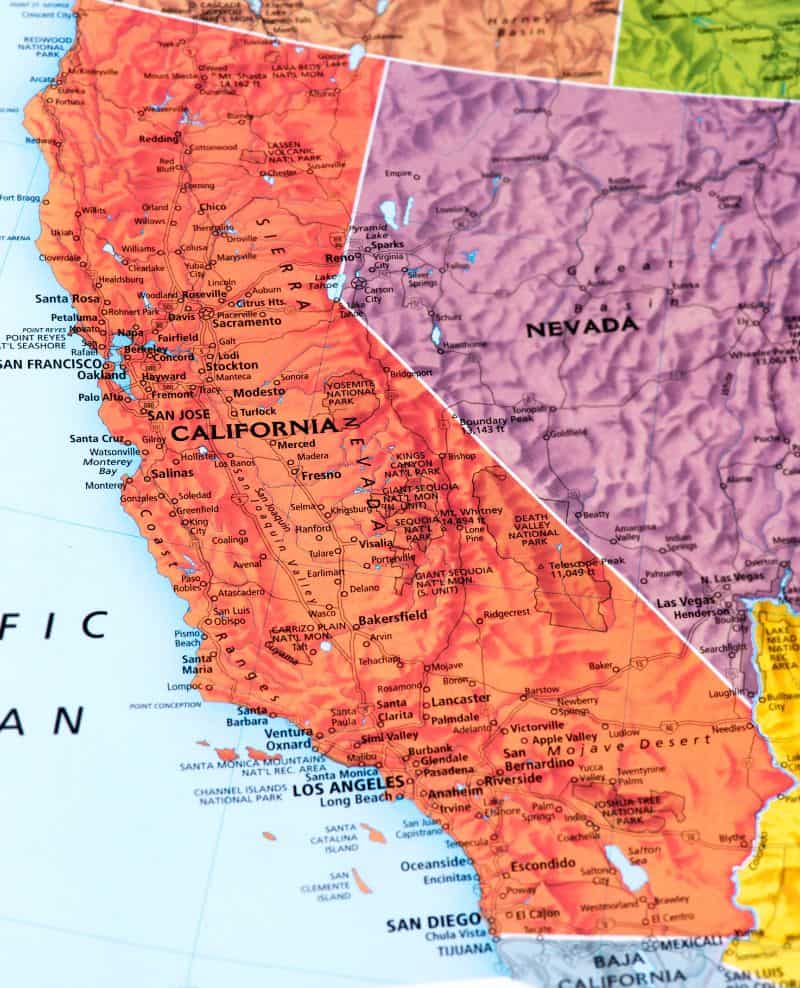
California remains closed to online sportsbooks, but prediction apps now offer sports‑linked event contracts in the state under federal trading rules rather than state gambling law.
Business
Predicition Products Hit California: FanDuel, DraftKings and the New Rules of Risk
As prediction markets scale into “closed” states such as California, leagues, tribes, and regulators are increasingly focused on whether these products should sit under trading rules, gambling rules, or some combination of the two.
Business
Social Media, AI, and the Psychology of Play

Modern casino marketing: A live dealer introduces the game, while the AIDA system —attention, interest, desire, action— remains vital for engaging players across new digital channels.
Business
Old Rules, New Channels: Decoding Persuasion in iGaming Marketing
A new look at how old school trust and new tech rewrite the marketing playbook.

The risk of decision fatigue grows with every choice — each new offer, nudge, or message depletes mental resources, increasing the chance of poorer, riskier decisions.
Business
Decision Fatigue Raises the Stakes in iGaming Marketing
The transition from traditional persuasion (Cialdini’s principles) to personalized, automated, and always-on digital techniques

Live dealer at a blackjack table, demonstrating the essential human element in iGaming marketing as technology blends personalization with player protection.
Business
Human Touch, Digital Reach in iGaming Marketing
The Paradox of AI-Powered Marketing in iGaming: Can Technology Drive Engagement While Protecting Players?

Safer gambling prompts now appear at critical moments during play—session timers, deposit alerts, and reality checks that pause engagement to encourage player reflection and control.
Business
Safer by Design: How iGaming Marketing's Strategy Became Slowing Down
When Friction Becomes Competitive Advantage—How the Industry Rewrote Its Profit Playbook
EDITORIAL REVIEW
WHERE EVIDENCE SHARPENS YOUR UNDERSTANDING
Stories that cut-through noise. Fact lead exploration of industry trends, research, reforms and what's beneath the headlines.
Editorial Review
Swedish Trotting Bets: What the ATG–Demoskop Survey Reveals
Most Swedes have gambled on something in the past 12 months, and gambling for money is about equally common across Sweden’s regions. Within that broad picture, the new ATG–Demoskop survey finds clear differences between age groups and products: Swedes +55 are much more likely to bet on trotting, younger adults lean towards other forms of play, and trotting bettors report higher life satisfaction than non‑players. At the same time, the data shows that trotting is associated with a wider range of emotions than other gambling – from excitement and anticipation to social connection and pride – and that, when asked directly, a clear majority still say gambling companies should be allowed to operate in Sweden, as long as they follow the rules.

Behind the ATG–Demoskop numbers is a live sport with its own rituals – from victory laps like this to Saturdays built around major trotting race days. Photo: Micke Andersson. © Alamy.
EDITORIAL REVIEW
Public Perceptions of the Horse Industry and Gambling’s Role in Sweden
Swedes see the horse industry as an important part of society, but have limited insight into how it is funded. In a new nationwide survey from Demoskop, commissioned by ATG, 73 percent say the horse industry is important for children’s and young people’s leisure and development, while only 17 percent believe that betting on trotting and racing is one of its main funding sources. At the same time, 49 percent consider gambling revenues from trotting and racing a reasonable way to help finance the sector, and 61 percent think gambling companies have a legitimate place in society, provided they follow laws and rules. Together, these findings offer a rare, data‑driven look at how horses, meaningful leisure and gambling companies intersect in Swedish public opinion.

A new ATG–Demoskop survey links horses to “meaningful leisure” for youth – and shows how Swedish public opinion weighs gambling in that picture.
Analysis
Closing 2025: Shifts, Opportunities, Risks - and Growth Zones in iGaming
2025 marked the start of a maturity phase for regulated iGaming, with AI, regulation and brand trust reshaping who grows, how, and at what cost.

Red dice tower, iGaming 2025, regulated markets, risk management, AI and brand trust, online gambling trends.
Editorial review
Series on: How the state was marketing gambling in Sweden from 1980 - 2025
Four in-depth articles take you on a journey through the history of state-driven gambling marketing in Sweden—from the heyday of the monopoly in the 1980s, through the first signs of liberalization in 2004, to the landmark marketplace regulation of 2019 and the closing of Casino Cosmopol in 2025.

Bellmanlotteriet Launch—Historic Swedish Lottery, Source Svenska Spel
Editorial review
Selling the Dream: Gambling Becomes the Heart of Swedish Home Life, 1890s–1949
When betting slips became as familiar as coffee cups, Sweden’s government pioneered state-sponsored marketing—turning games of chance into everyday rituals at the center of family life.

Swedish Gambling History launch of Lotto, Source: Svenska Spel
Editorial review
Big Dreams, Bigger Budgets: How Sweden Marketed Gambling, 1950–1980
How did Sweden’s state monopoly transform gambling into a national ritual—turning Lotto into household comfort, while marketing assured Swedes their ticket was a stake in civic progress?

Eurojackpot—Lottery Draw Broadcast, Source: Svenska Spel
Editorial review
Commercial Fever—Deregulation and Digitalization Redefine Gambling Marketing, 1981–2000
Saturday Lotto drew families to the TV, “Lotto-Åke” became a cult icon, and instant games made winning feel like a household tradition. But as the new millennium loomed, foreign betting sites, changing laws, and the promise (and peril) of EU membership.

Closing: Casino Cosmopol,Stockholm. Roland Magnusson/Alamy
Editorial review
From Monopoly to Marketplace: Sweden’s Gambling Marketing Revolution, 2001–2025
Familiar kitchens still glowed in Triss and Lotto adverts, but the hum of smartphones, the banner ads, and online jackpots signaled a new era. Monopoly gave way to pluralism: nostalgia, risk, and responsibility were all up for grabs.
Regulation
Our series on European Gambling Regulation

A comparison of the UK and Netherlands gambling regulations from 2021 to 2025.

Online betting surges even as overall gambling declines, in the UK

Measuring Gambling Risk — Data Insights from the UK and the Netherlands

VPN usage is a rising digital trend among European online gamblers.
Balancing the odds: UK - Netherlands
FACTS ON: Between 2021 and 2025, the UK’s mature regime kept channelisation high, though new stake limits and affordability checks signal tougher rules. Meanwhile, Dutch channelisation fell below 50% as strict taxes, deposit caps, and ad bans drove players to unlicensed sites, sharply contrasting regulatory outcomes. The lesson: when rules constrain the market more than protect it, regulation risks defeating its own purpose.
UK Gambling participation hits record low
FACTS ON: The UK’s gambling landscape is undergoing a transformation. According to the latest Gambling Survey for Great Britain published on the 22nd of May 2025, gambling participation has dropped to its lowest level since the survey’s inception in 2023, while online casino and digital gambling activity continue to climb. This apparent paradox is reshaping industry strategies, regulatory approaches, and policy debates — across Europe.
Measuring Gambling Harm in Europe
FACTS ON: Across Europe, regulators, policymakers, and industry leaders are grappling with how best to measure and address gambling harm. This article compares the two most influential national gambling surveys: the Gambling Survey for Great Britain (GSGB) and the Dutch NOGA Online Barometer. These surveys do more than count gamblers—they shape public policy, inform industry practice, and set benchmarks for responsible gambling
Navigating Channelisation and Unlicensed Play
FACTS ON: The slow pace of policy reform, shaped by political debate and shifting public opinion, stands in stark contrast to the agility of unlicensed operators. Throughout the article, this gap is illustrated by how enforcement struggles to keep pace with player migration, rising VPN use, and the relentless dynamism of offshore platforms—now the central challenge for European gambling policy.
INTERVIEWS
MEET THE PEOPLE DRIVING INNOVATION AND POLICY
Direct insight from those shaping iGaming’s future—giving you facts, context, and strategy for what comes next.
INTERVIEW MAY 2026
Interview with Soo Kim Executive Chairman, Bally’s Corporation: Regulatory change is like gravity — there is nothing more certain than that
The Executive Chairman on the primal pull of gambling, why omnichannel is a structural bet not a marketing strategy, and what he sees when he looks at a struggling casino that others have written off.

Soo Kim, Executive Chairman, Bally's Corporation.
INTERVIEW
Interview with Yana Makarochkina: Can AI Decode the iGaming Market?
Blask tracks brand share, offshore activity, and player demand across 126 countries — but operators should understand what the numbers are, and are not, measuring.

Yana Makarochkina, CMO at Blask. Image courtesy of Blask.
INTERVIEW
Interview with Cole Wogoman, NCPG Director of Government Relations and League Partnerships
Our editor spoke with Cole Wogoman, Director of Government Relations and League Partnerships at the National Council on Problem Gambling (NCPG), about what prediction platforms look like when you focus on player safety rather than product labels.
He explains why NCPG considers many event‑based futures “functionally gambling” from a harm perspective and why, in his view, any platform offering that experience should meet the same basic safeguards as regulated sportsbetting.

Cole Wogoman, Director of Government Relations & League Partnerships at the National Council on Problem Gambling (NCPG) Photo courtesy of NCPG
INTERVIEW
Interview with Sophie Linghag, Head of Fair Play, RG & AML at ATG: Inside ATG's Use of GameScanner for Early Risk Detection
With Mindway’s GameScanner, ATG gains an instant overview of risk – from all players down to a single customer – and a clearer basis for targeted responsible gambling actions.

Sophie Linghag, Head of Fair Play, RG & AML, ATG. Image courtesy of ATG.

David Katz, Managing Director & Senior Equity Research Analyst at Jefferies, on why he doubts prediction products and backs regulated casino–digital and LatAm growth. Image courtesy of Jefferies.
INTERVIEW
Interview with analyst David Katz: Prediction products are a difficult narrow space
Jefferies analyst David Katz argues that prediction markets face limited participation and long‑term regulatory uncertainty, while he sees the real upside in U.S. land‑based casinos partnering with digital operators and in regulated iGaming growth across Latin America.

Rickard Vikström, founder of Internet Vikings. Photo courtesy of Internet Vikings
INTERVIEW
The rising complexity of fragmented compliance
Rickard Vikström, Internet Vikings on regulation: "The real headache isn’t stricter rules — it’s that every country and state has its own rulebook."

Paula Murphy, Mindway AI - Championing transparency in responsible gambling. June 2025 Photo courtesy of Mindway AI/ Paula Murphy
INTERVIEW
Player Protection Reimagined: How AI and Neuroscience Drive Early Detection at Mindway AI
Inside the partnership of advanced artificial intelligence and neuroscience expertise powering new standards in player protection, risk detection, and responsible gambling.

Distinguished Emeritus Professor of Behavioural Addiction at Nottingham Trent University Dr Mark Griffiths. Photo courtesy of Dr Mark Griffiths
INTERVIEW
Interview with Dr Mark Griffiths: 38 Years of Gambling and Behavioral Addicition Research
A researcher’s perspective on technology shifts, policy development, and effective player protection in modern gambling.
Editorial Review and interviews
The rise of AI-powered tools reshaping how operators understand their markets and reach their players.
In the coming weeks, iGaming Review will be turning its focus toward one of the most significant shifts in the industry right now: the rise of AI-powered tools reshaping how operators understand their markets and reach their players. We'll be sitting down with some of the leading voices behind these platforms — covering everything from AI-driven market intelligence to predictive marketing and CRM.
Alongside those conversations, we'll be publishing a deeper editorial piece weighing the real advantages these tools offer against the limitations that don't always make it into the pitch — from data transparency and model reliability to the competitive gaps they can create between larger and smaller operators. Multiple perspectives, as always.

OUR NEWS CATEGORIES

BUSINESS

REGULATION

EDITORIAL REVIEW

INTERVIEWS
iGaming Review
Our mission
iGaming Review brings clarity and fact to every page. We report what matters—no jargon, just evidence and perspective that broaden your view. Fact-based, relevant, and written for those shaping iGaming’s future.
