
Editorial Review · Feature
Nostalgia, Focus and the Games That Last
Four industry conversations reveal how familiar experiences become new ideas — and what makes those ideas worth pursuing.
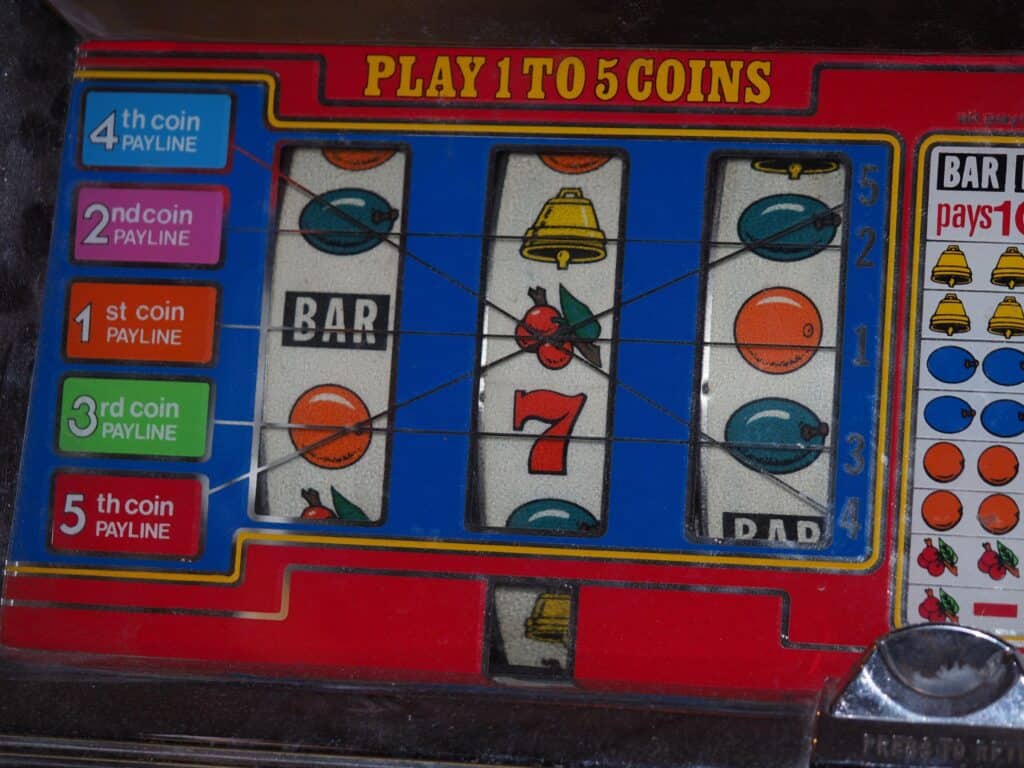
In a brainstorming session at Relax Gaming, a product owner pitched a slot inspired by the music video games of the 1990s and early 2000s. The room responded. Recalling the moment for iGaming Review, Chief Product Officer Tony O’Mahony described “that lightning, when it lights everybody up”. Guitar Quest became the first concept he approved after joining and the company’s Game of the Quarter for Q2 2026. An idea about the future had begun with a memory.1
That connection runs through four of our recent interviews. People bring the games they remember, the cultures they know and the problems they have encountered to their work. The harder question comes afterwards: which ideas deserve the time, money and attention needed to reach an audience?
The past is a starting point
Helen Walton, co-founder and Chief Commercial Officer of G Games, also traced the inspiration for its multiplayer project, 99 Royale, to nostalgic video games and their communities. In August, ahead of its planned September launch, she described an attempt to bring that shared experience into casino play. “It’s hard to be proud of doing the same thing over and over,” she said.2
Claudia Heiling’s enthusiasm began with childhood games and early PC play. After leaving Greentube for other fields, she missed the pace and possibilities of the industry. Now Golden Whale’s co-founder and Chief Operating Officer, she describes herself as “the oil in the gearbox”: aligning people so that ideas become something usable.3
For Richard Ganster, Greentube’s games strategy and portfolio director, cultural familiarity explains the value of local studios. People who grew up in a market bring knowledge that a central office cannot simply reproduce. He points to Dutch colleagues drawing on their own gaming culture.4
Memory can supply a theme, a social experience or an instinct about what feels right. It also creates a demanding comparison. Players who recognise an influence may know exactly what they liked about it. Familiarity gets an idea noticed; the experience still has to justify returning.
Fewer releases, more at stake
O’Mahony describes Relax concentrating its efforts on fewer releases that can command attention across the business. Each title competes for studio time, marketing and operators’ attention. His test is whether an idea offers something meaningfully different.1
Walton describes a market divided between inexpensive commodity content and a few blockbusters, with an uncomfortable space in the middle. She sees AI intensifying that pressure. At the time of her interview, roughly 90% of G Games was working on 99 Royale, after five years of development. Distribution relationships and operator support, she stressed, were essential to giving the format a chance.2
These accounts suggest a change in where the difficult decisions sit. Producing another title is one task; earning sustained attention is another. A bigger production budget cannot guarantee the latter. Concentrating resources may improve a release’s prospects, but it also leaves more riding on its reception.
That makes the decision to stop a project as important as the ability to finish one. A crowded release calendar can reward visible activity inside a company even when another launch adds little for its customers. The discipline lies in knowing which ideas to leave behind.
Ganster approaches that choice through franchises. “What does game two look like?” is a question Greentube asks before approving the first. In Rumble Riches Haulin’ Gold, he describes the truck modifiers and the bonus climax as “load-bearing”. Cutting them would have weakened the experience the team wanted to develop.4
A returning series can still change direction. Relax had presented Money Train 4 as the last instalment; O’Mahony said the team revisited that decision when it found new progression mechanics worth pursuing for Money Train 5.1
The useful distinction is between a familiar name and a repeat of the same experience. A sequel can build on what players understand while giving them something else to discover. A completely new format faces the opposite challenge: explaining enough, quickly enough, for people to want to stay.
The brief meets the market
Technology and regulation enter those choices early. Ganster says Greentube uses AI for initial concepts and testing, while keeping mathematics, random-number design and finished artwork in human hands. Regulatory requirements are part of the brief before development. Restrictions can force designers to find a different route to the experience they want.4
Britain provides a concrete example of the conditions games must meet. Online slots are limited to £5 per game cycle for players aged 25 and over and £2 for those aged 18–24. The limits took effect in April and May 2025 respectively. Separately, UK Remote Gaming Duty rose from 21% to 40% of gross gambling profits on 1 April 2026.5, 6
These are different pressures: one limits permitted stakes; the other changes operators’ economics. Neither interview establishes that the duty increase caused fewer releases or greater reliance on franchises. What the interviews do show is that a creative brief has to survive practical constraints long before a launch campaign begins.
After the launch, look for results
The same scrutiny belongs behind the scenes. Golden Whale’s Bonus Pilot, launched in January 2026, is designed to guide incentive decisions. Heiling cited the company’s estimate that only 5–15% of incentives were typically deployed optimally, based on its analysis of operations across four continents. That is Golden Whale’s assessment, rather than an independently established industry benchmark.3
Her purchasing advice is useful beyond AI: decide how success will be measured, compare the supplier with existing capabilities, and establish what success should look like after twelve months. Continue evaluating after the initial trial.3
For gambling businesses, the definition of success needs care. More deposits may support a commercial claim; they do not establish a better player experience. O’Mahony places responsible design at the concept stage.1 Britain’s Gambling Commission requires remote operators to assess how individual interactions affect behaviour and the remaining risk of harm, including whether further action is needed.7
Walton’s account of 99 Royale was given before launch. It describes ambition and preparation, rather than subsequent commercial results.2 That leaves the central question open, as it should. An excited room can identify a promising idea. Only its life beyond that room can show what it delivers.
Further Reading & Key Sources
This feature draws on four previously published iGaming Review interviews. Product descriptions, strategies and company estimates are attributed to the interviewees; the connections and assessments are our editorial interpretation. No new interviews were conducted for this article. Regulatory sources checked on 14 October 2026.
- Our interview with Tony O’Mahony, Relax Gaming. August 2026.
- Our interview with Helen Walton, G Games. 20 August 2026.
- Our interview with Claudia Heiling, Golden Whale. 4 September 2026.
- Our interview with Richard Ganster, Greentube. 10 September 2026.
- Gambling Commission: online slots stake limit guidance. Updated 16 June 2025.
- HM Revenue & Customs: Remote Gaming Duty, Excise Notice 455a. Current rate and tax base.
- Gambling Commission: remote customer interaction guidance, requirement 12. Effective 31 October 2023.